
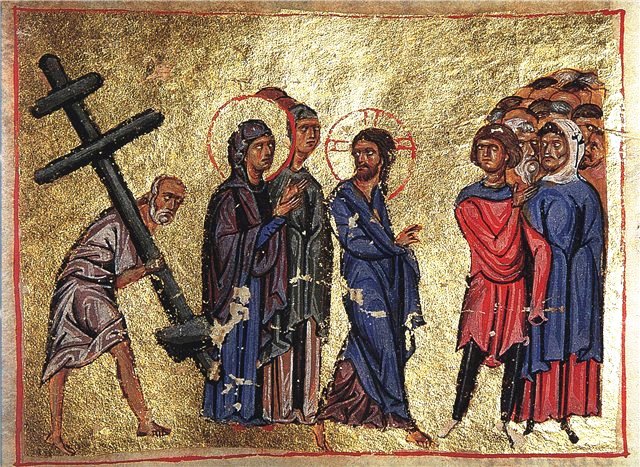
Picture by Anonymous – Center of MSS (Tbilisi, Georgia), Public Domain
Fifty-nine and half years ago, a Ukrainian born dressmaker named Abraham Zapruder stood waiting on a concrete plinth on the grassy knoll in Dealey Plaza, Dallas, Texas.
He was waiting for the motorcade of the President, John Fitzgerald Kennedy, to pass by, so that he could film it with his 8mm Bell and Howell home-movie camera. A Democrat, Zapruder admired JFK; and like anyone, he wanted to capture something of his encounter with fame, glamour, and power. On the day he was one of only a few with a camera. Today of course, everyone would have had one.
But in a matter of 26 seconds, Zapruder had recorded perhaps the most famous piece of live footage ever filmed; and ensured that his name became forever linked with the grotesque scene that unfolded before him, as the bullets plunged into the President.
Unwittingly, this innocent bystander had been drawn into the Kennedy story.
Today, we remember another parade: the journey of Jesus from the Praetorium to the place of the skull, Golgotha. He was be led in procession by a company of soldiers, who had just brutalised and ridiculed him. He had already been flogged, and beaten repeatedly around the head. He was probably concussed.
To add to his humiliation, he was going to have to carry his own cross through the streets to the place where he would be nailed upon it – like being forced to dig your own grave. In his weakened state, this was probably not going to work.
And so the soldiers grabbed a bystander – the man named Simon who was from Cyrene; and they forced him to carry the cross, as Luke puts it, behind Jesus. What was Simon doing there? Had he come to see the spectacle? Luke says that he was coming in from the country – perhaps he had accidentally stumbled across the scene. Whatever the case, this guy was no longer a bystander; he was pressganged into the pages of Jesus’ story.
And are three things to grasp from this cameo. First, Simon is named, and that is significant. Second, we see Jesus’s weakness on the way to the cross. And third, as a bearer of the cross, Simon provides a picture of the Christian life.
And three of the gospel writers mention his name. Now, this is a significant detail that we often pass by. Not all the characters in the gospel stories are named. But Simon is; and we also know that he came from Cyrene, in Libya, a long way from Jerusalem. It was a place with a large Jewish community in those days, and it would make sense that Simon was Jew of this diaspora on a pilgrimage.
But there’s more to this. Scholars tell us that naming a person in this way was done because he was known to the community of readers. Mark says that he was the father of Alexander and Rufus – as if we the readers know very well who Alexander and Rufus are. “It was Simon, Alex and Rufie’s dad – he carried the cross for Jesus that day. You can ask them – they remember the story well.”
Intriguingly, in 1941, an ossuary, which is a box of bones, was found in a burial cave in the Kidron valley, just north of Jerusalem. On the box was inscribed ‘Alexander, son of Simon’. We cannot be sure that this is the same person, but it may well be.
The point is not that it is but that it could be, because Simon and his sons are not fictional. They were very much flesh and blood people. And like Zapruder’s film, Simon became a witness to the shocking events that he saw – and forever connected to them.
But not that is not the only reason that Simon appears in the story of Jesus’ death. A second reason is this. Simon is needed because Jesus is physically broken already as his marched to the cross. He cannot carry it. The job of robbing him of every last shred of dignity has been successful.
It’s a strange detail because we are so used to the idea that Jesus carries our burdens; that he himself bore our sins in his body on the tree. That might lead us to imagine that what we are looking at when we look at the cross is an act of superhuman strength, marked by courage and physical endurance.
But it is not that. Jesus does not save us by a demonstration of muscle, but by becoming weak – so weak that he cannot even carry the cross.
Now, we know that he is undeniably powerful – he can calm a storm and heal the sick, and the demons run scared before him. His power is the power the brought worlds out of nothing; it is the energy that powers the stars; it is the power even over life and death.
But here: he cannot even lift a piece of wood. He needs to accept the help of a passerby. He has not even the strength to perform his own humiliation.
Thus: we are shown the extent of the humility of the Son of God. As Paul says in Philippians 2, Jesus
being in very nature God,
did not consider equality with God something to be used to his own advantage;
rather, he made himself nothing
by taking the very nature of a servant,
being made in human likeness.
And being found in appearance as a man,
he humbled himself
by becoming obedient to death –
even death on a cross!
We should marvel at this divine humility, but we should also ask, what was the purpose of it? We might even be angry: why don’t you do something Jesus, something that will show them that this is not right? That they can’t win?
But this was not simply self-abasement for its own sake. The New Testament explains it simple terms: it was an act of sacrificial love. This is love, says John in his letter, not that we loved God, but that he loved us, and gave his Son as an atoning sacrifice for our sins. Motivated by love, Jesus accepts the mission of atoning for our sin – which means accepting in his own body the consequences of sin: not simply the sum total of our little peccadilloes but the whole volume of our rage against God for daring to be God.
The prophecy of Isaiah poetically describes Christ’s degradation but also his weakness:
He was oppressed and afflicted,
yet he did not open his mouth;
he was led like a lamb to the slaughter,
and as a sheep before its shearers is silent,
so he did not open his mouth.
By oppression and judgment he was taken away.
There’s nothing powerful about the lamb on the way to be slaughtered. He is merely the victim.
And yet Jesus was not simply an innocent bystander like Simon or like Abraham Zapruder, drawn into events he could not control against his will. Isaiah puts it this way:
he was pierced for our transgressions,
he was crushed for our iniquities;
the punishment that brought us peace was on him,
and by his wounds we are healed.
We all, like sheep, have gone astray,
each of us has turned to our own way;
and the Lord has laid on him
the iniquity of us all.
He becomes like a Lamb because we have become like sheep. It’s no surprise that an agricultural society would reach for farming metaphors so readily. But Isaiah makes it clear: to cleanse us and to heal us, and to reconcile us to God, since each one of us has strayed, Jesus offers himself to bear upon himself our iniquities. And in bearing our sins, we find that he is so weakened, that he cannot bear the beam of wood upon which he will be nailed.
Thirdly: when the cross – or at least the horizontal beam called the pabulum – was set upon Simon of Cyrene, and he was forced to follow behind Jesus, we can’t help thinking of Jesus’ words: Whoever wants to be my disciple must deny themselves and take up their cross and follow me.
Simon, without intending to be, is the visible reminder of that call: that Jesus calls us to follow behind him in a life of sacrificial love for the sake of others. To be his disciple, you cannot avoid the cross. You cannot fail to accept what Jesus offers you there, but also you cannot bypass the cost to yourself. If you receive his body and blood to eternal life, then you must also receive his yoke. You must trail in his wake. Jesus, who denied himself, asks us to deny ourselves. Jesus, who emptied himself, asks us to empty ourselves. As Bonhoeffer once said: When Jesus calls someone, he bids them come and die.
This is so hard for the 21st century person, who has been told again and again to embrace the beautiful genius in the mirror, that as a consumer you are the most important person in the world, and that as a customer you are always right. How can I deny myself, since I am one in whom I can really believe?
And yet, if only we knew it: there’s an extraordinary freedom and delight in putting aside the tedious fixation with yourself and following after Jesus by forgetting yourself, and by giving yourself to deeds of sacrificial love. What can sound harsh to our ears is actually a divine way to live; what looks like weakness turns out to be the very power of God; what looks like loss is actually gain.
Perhaps you are still something of a Zapruder or a Simon of Cyrene: hoping to be an interested bystander. Perhaps you are an admirer of Jesus – as well you might be. But the testimony of Simon of Cyrene, a witness to the death of Jesus, stands as an invitation to something more: to become not just a fan but a follower – one who receives with thanks the gift of Christ’s humble bearing of your sins, and who seeks to live a life that stands as a visible imprint of the cross.
Rev Dr Michael Jensen is Rector at St Marks Darling Point in Sydney, and the Anglican half of the WADR Project Team.
 thewadrproject.com