
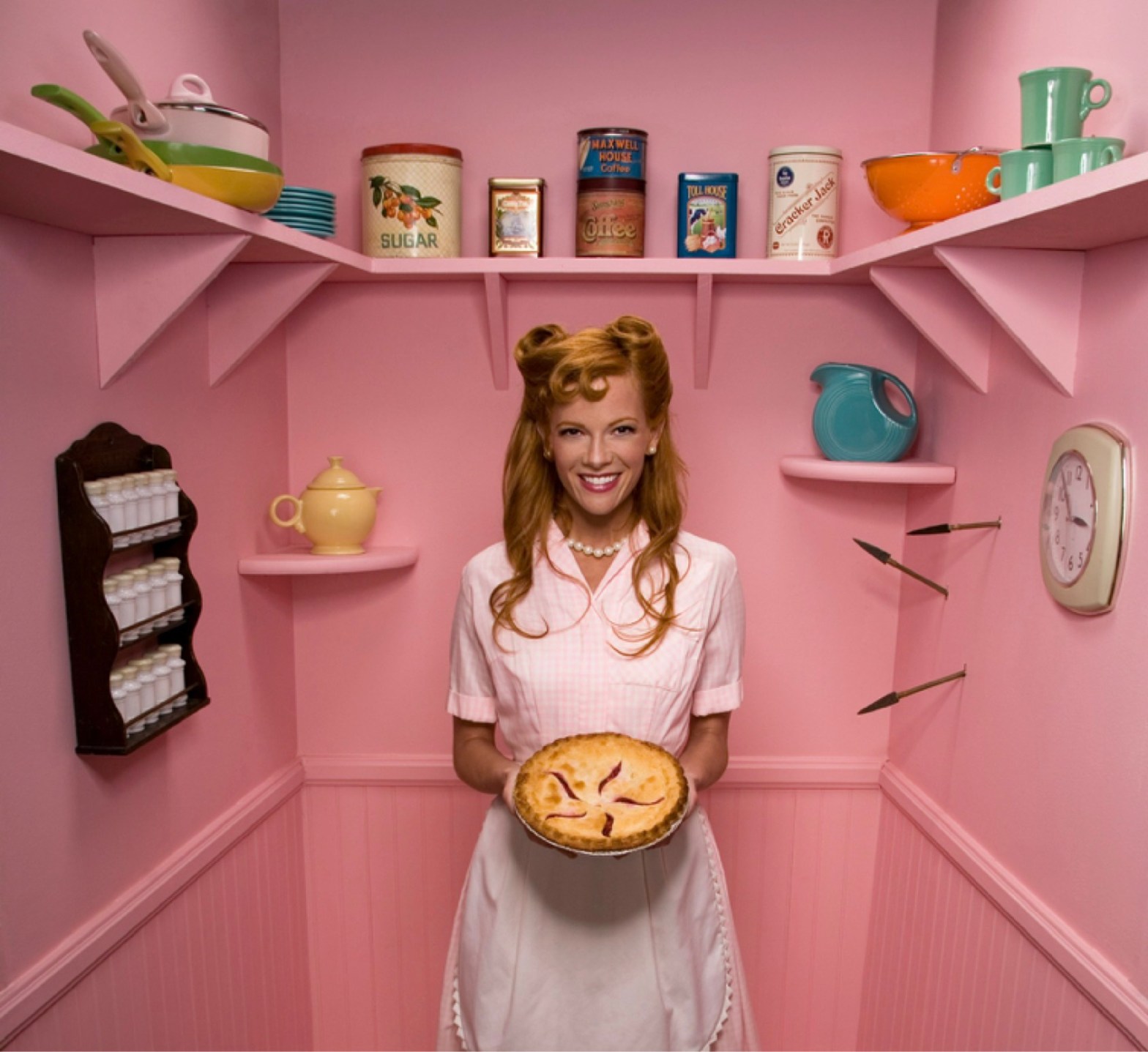
Photo by Marisa Howenstine on Unsplash
On International Women’s Day, people often take the chance to post on social media about being thankful for the women in their family. Is this, though, going to cut it when we are seeing stories in the media every day about a growing misogyny among young men? And, indeed, the day wasn’t intended to be a hallmark ready holiday. It arose out of the labour movement and had goals such as women’s suffrage and rights at work.
Let me not downplay, though, the importance of thankfulness towards female family. I have been engaged in some family history recently. The lives of my foremothers reveal the ongoing struggles of women. Fair warning here, I plan to tell their stories unvarnished, and these stories include trauma. I am making an argument by story against a dangerous nostalgia around so-called traditional gender roles.
I know more details of the stories of two of my great grandmothers, having pieced together family lore and historical records. Their lives reveal the impacts of husbands.
One of my paternal great grandmothers was Florence. Florence immigrated to Australia from New Zealand along with several siblings. I have particular reason to be interested in her: though I never met her, my father and his mother often told me I was like her in personality. That is, they said, she would have been like you if she had had an easier childhood. I was never told what was difficult about her childhood, my father at least knew very little. A few years ago, I stumbled across the story in a digitised newspaper of the time. My great great grandfather had died and my great great grandmother, Florence’s mother, had remarried. She had been left property by my great great grandfather so the remarriage wasn’t by necessity. But it wasn’t a happy one.
The newspaper account lays it bare. This second husband had killed the baby he had with her, and was jailed for the murder. He planned to murder my great great grandmother too, but she wasn’t there. The following year her remaining younger children were taken from her due to associating with “loose characters.” One of these was Florence, and she was put into state care. No wonder then Florence left the country as a young woman. Her unusual surname would have made her immediately identifiable as part of this family. We can only guess what trepidation she may have held as she entered into marriage herself, or what fears she held for her four daughters. What I can say is she carried enough trauma that her own grandson described her to me as characterised by sadness.
I also know some details of another great grandmother, Mary Jane. There is some murkiness in the records round her birth, but the local police gazette suggests that her father abandoned her, and he was dragged in front of the court to account for this. She was not at this stage, as far as I can tell, in the care of her biological mother either, though it is hard to come at the truth here. She marries my great grandfather, a widower who was a respected community member, deacon of the local Baptist church. There is some story there, given she is eighteen years younger. My mother remembers her as having been his housekeeper, but she is only twenty when they marry. Whatever the story, this marriage initially sets her up well. But it will all fall apart when he dies when she is in her late thirties. The family is forced by lack of funds to relocate to Sydney, and they fall from comfortable middle class to working class.
This leads me to the stories of my grandmothers. My grandmother Joy is her daughter. Due to the family circumstances, she leaves school around twelve and is sent to work at a factory. It is here at work she meets my grandfather and they marry. But this wasn’t the end of her working life. The nostalgic fantasy of the 1950s with wife at home was not my mother’s recollection of the life of her mother Joy, who she remembers working minimum wage jobs. She also remembers her as engaged in the ministry of helping to plant the local Baptist church from her lounge room. We can understand how Joy felt about her own reduced opportunities by what she did for her two daughters. My grandfather thought higher education was wasted on women, so my grandmother undertook to work low paid jobs in order to justify keeping them studying, and both her daughters went to university. Though she died when I was a child, I am sure she would be overjoyed to know that her granddaughters hold multiple tertiary qualifications between them, including two of us with doctorates.
My other grandmother was Florence’s daughter. She was also named Joy and also met her husband at work. She was a bookkeeper, having been sent to a girls technical high school to learn the skills thought proper to the home and the types of jobs a woman might undertake. She only had one living child, my father. My father assumed they could have no more children, but my grandmother confided in me as an adult that she had chosen to stop at one. As a teenager she had been the surrogate mother to her twelve years younger twin sisters, so I suspect she felt she had done enough childrearing. She was widowed before I was born, and my memory of her is as happily working as a bookkeeper in her widowhood, with significant independence allowing her to live near the beach and take cruises. One detail of her working life I only found out as a teenager. From her wage after my twin and I were born, she put aside money every week for each of us into a bank account. She used her independent wage to store up a small nest egg for her grandchildren.
And then my mother. My mother felt a call on her life by God as a child, one she thought might have been fulfilled by marrying a man who became a minister. But over time she saw that God had called her in her work as a clinical social worker, and in the many ways she served the church herself, for instance her work on a denominational safeguarding committee when such things were new. Or lecturing Baptist students in pastoral care and counselling after she gained her Masters. And we cannot discount the significance of her higher wage supplementing my father’s ministry one. And then both my parents worked towards the ordination of women within our denomination, work for which I am thankful as their ordained daughter.
To listen to these stories is to gain necessary perspective on the current moment. A recent study showed 40% of Australian teenage boys think women lie about domestic and sexual violence. I think of my great grandmother, and how she lied by omission. We didn’t know her story of this trauma. I suspect this isn’t what they mean by lie. Of course those teen boys don’t know the multitude of stories told me by women, stories they do not share in public. I think too of another recent study which showed almost a third of Gen Z men globally think women should obey their husbands, and I think about how that would have served Florence’s mother Annie.
When I am told things are worse for women now due to breakdown of traditional roles, I think back to the last few generations of women in my family and wonder when traditional roles protected women, or whether they really existed the way people imagine they did. We can be prone to remember the past with rosy tinted nostalgia, especially within the struggles of the current day. While this may provide comfort, when we recall negative aspects with this rosy tint we open ourselves up to repeat past harms.
I see the tradwife phenomenon among younger women and wonder how it will hold up within the myriad complexities of life. It works for a few: those who have good husbands who remain alive and faithful, and who have enough wealth to weather the crises life will bring. And behind this possibility for a wealthy few is the labour of many other families globally for whom one wage will never be enough. I think about how both the unpaid and paid work of my foremothers benefited their families, enabling survival and education. Life. They were, in so many ways, providers.
And even protectors. One last story, of my fifth great grandmother Isabella. She was the sister of Bonnie Prince Charlie’s private secretary. Reportedly she convinced her suitor, my 5th great grandfather to fight on his side. But then after the battle of Culloden, my fifth great grandfather and her brother had to go into hiding. When soldiers came knocking, she hid her later husband under her skirts while she spun. Not surprising then that such a woman would raise my 4th great grandfather to be a chief justice who waged judicial war against slavery.
Our foremothers survived, provided, and protected. This is indeed how any of us exist today: because generations of women lived lives within complex and often difficult realities and worked to ensure those they held dear survived and even thrived. We cannot separate out their work, as if their work inside or outside of the home was more significant or valuable. What we can guess however, is that many of them and their families would have benefited from better protections, freedoms, and rights for women within society.
These stories reinforce for me the importance of continuing to work for and ensure equal rights for women, for the sake of them and their families. No, more than that, for the sake of our entire world. Global development and aid organisations have gender equality as a focus because doing so benefits societies as a whole. Am I thankful for these women in my family? I am indeed. And I am also convicted to continue to work to balance the scales. For in doing so, I foster a commitment to loving the least of these (Matthew 25:30) across generations.
Rev Dr Megan Powell du Toit is the Baptist half of the WADR team.
 thewadrproject.com